 (757) 356-4117
 Book Online


The Fastest Way to Cut Energy Bills and Improve Comfort
Your attic is the biggest energy leak in most Virginia Peninsula homes. In summer, an under-insulated attic lets heat pour into your living space, forcing your AC to work overtime. In winter, your heated air escapes upward through the same path. Either way, you’re paying to condition air that’s leaving your home.
Adding or upgrading attic insulation is one of the most cost-effective home improvements you can make. Most homeowners see energy savings of 15–30% after an insulation upgrade, and the improvement pays for itself within a few years through lower utility bills.
Worley’s installs attic insulation across the Virginia Peninsula. We evaluate what you have, tell you what you need, and install it properly — no upselling on products that don’t make sense for your home.
 (757) 356-4117
Types of Attic Insulation We Install

Blown-In Fiberglass
Loose fiberglass fibers are blown into the attic using specialized equipment, covering joists and filling gaps evenly. It’s the most popular choice for attic upgrades because it’s cost-effective, installs quickly over existing insulation, and delivers excellent coverage.
Best for: Open attic floors, adding insulation over existing material, and most standard attic retrofits. R-value per inch: approximately R-2.5 to R-3.7 Typical installed cost: $1.50–$2.50 per square foot
Blown-In Cellulose
Made from recycled paper products treated with fire retardant, cellulose is denser than fiberglass and provides slightly better air-sealing properties. It settles over time, so it’s installed at a higher initial depth to account for this.
Best for: Homeowners who want a recycled/eco-friendly option or slightly better air-sealing performance. R-value per inch: approximately R-3.2 to R-3.8 Typical installed cost: $1.50–$2.75 per square foot
Spray Foam Insulation
Spray foam expands on contact, sealing gaps and creating an air barrier in addition to insulation. Open-cell spray foam is used for interior applications, while closed-cell foam provides higher R-value and moisture resistance.
Best for: Sealing the attic envelope (rafters and roof deck), conditioned attics, homes with significant air leakage, and areas where moisture control is important. R-value per inch: R-3.7 (open-cell) to R-6.5 (closed-cell) Typical installed cost: $3.00–$7.00 per square foot
Batt Insulation (Fiberglass or Mineral Wool)
Pre-cut rolls or batts that are placed between joists. Batt insulation works well in new construction or when replacing old, damaged insulation. It’s less effective than blown-in for retrofits because it doesn’t conform around pipes, wires, and irregularities as well.
Best for: New construction, accessible attic spaces with standard joist spacing, and situations where old insulation is being removed and replaced. R-value per inch: R-3.0 to R-3.3 (fiberglass), R-3.3 to R-4.2 (mineral wool) Typical installed cost: $1.25–$2.50 per square foot
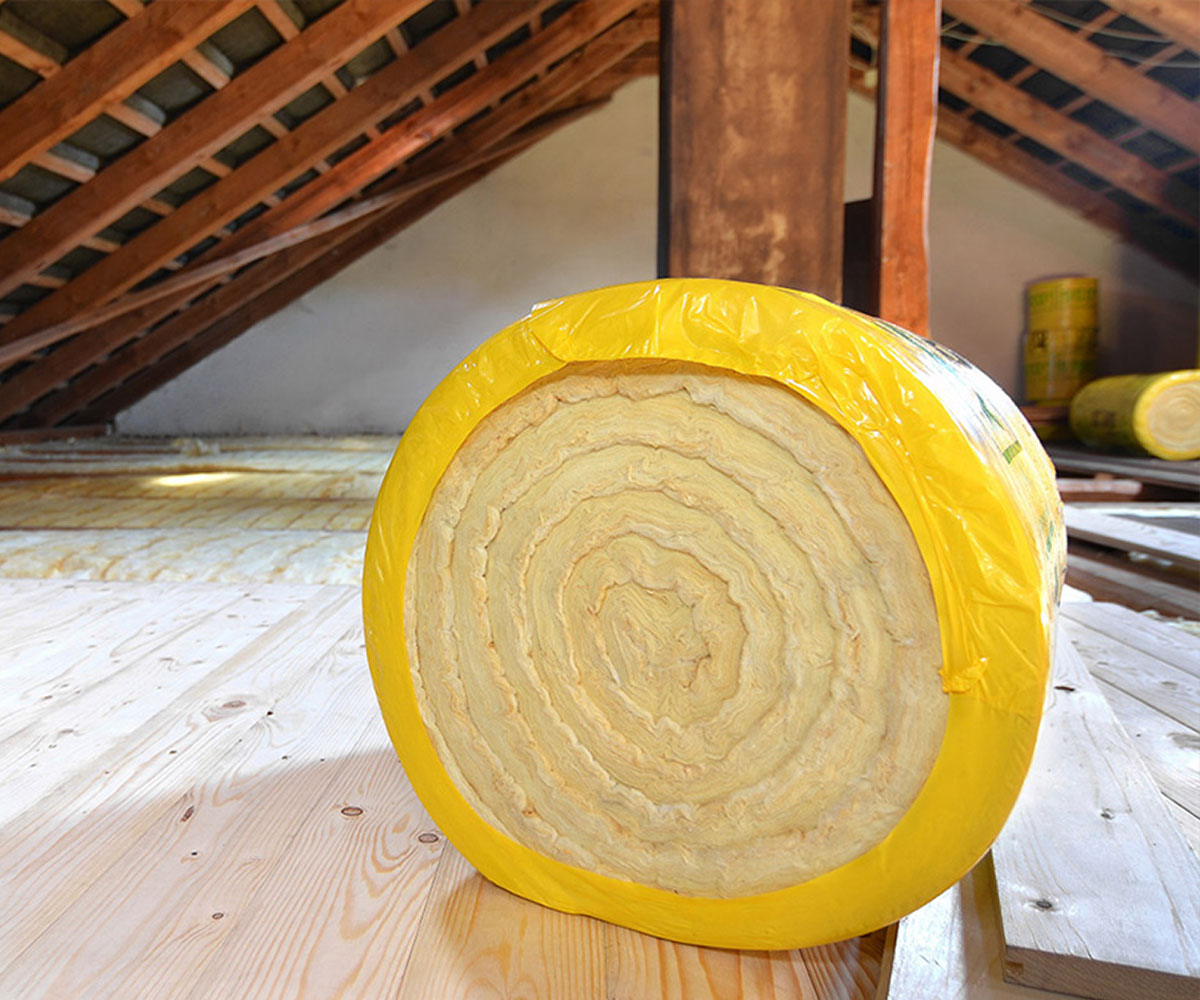
How Much Insulation Does my Virginia Attic need?
It can be a real challenge to know, as a homeowner, how much insulation your home needs to achieve maximum comfort. There are tools to make this task easier, like this one from the EPA that will tell you recommended home insulation R–values for your area.
That said, an insulation technician will be able to confidently assess your home’s insulation needs without a shadow of doubt. The team at Worley’s has been trained to expertly install attic insulation in your Chesapeake, Virginia Beach, Norfolk, and the Newport News-area home. We’re also expanding our expertise to serve Isle of Wight County homes, bringing the same professional attic insulation services in Isle of Wight that have helped thousands of Peninsula homeowners improve comfort and reduce energy costs.
Worley’s services include loose fill cellulose insulation installation on attic floors, and closed-cell spray foam on attic rafters for a complete seal appropriate for our climate.
How Attic Insulation and Your HVAC System Work Together
Insulation and your HVAC system are two sides of the same coin. Even the most efficient HVAC system wastes energy if your home can’t hold onto the conditioned air it produces

For heating
Up to 25% of your home’s heat loss occurs through an under-insulated attic. That means your furnace or heat pump is working a quarter harder than it needs to just to compensate for heat escaping through the ceiling.

For cooling
In summer, an under-insulated attic acts like a radiator, pushing heat down into your living space. Temperatures in an uninsulated Peninsula attic can reach 140°F+ on a hot day. Proper insulation creates a barrier that keeps that heat where it belongs.

The bottom line
If you’re considering a new HVAC system, upgrading your attic insulation at the same time maximizes your investment. You may even be able to install a smaller, less expensive system because it won’t have to overcome insulation deficiencies.
We often recommend an insulation evaluation alongside any HVAC consultation. Learn more about our HVAC services →
R-Value Guide for Virginia Peninsula Homes
R-value measures insulation’s resistance to heat flow. Higher R-value means better insulation. The recommended R-value depends on your climate zone.
Virginia Peninsula falls in DOE Climate Zone 4
The recommended attic insulation level is R-38 to R-60.
Here’s what that means in practical terms:
- R-49 (the sweet spot for most Peninsula homes) requires about 14–18 inches
- R-60 (the upper recommendation) requires about 17–22 inches
- R-38 (the minimum recommendation) requires about 10–14 inches of blown-in fiberglass or cellulose
What most Peninsula homes have
We frequently find attics with only R-19 to R-30 of insulation — well below the current recommendation. Many older homes have even less. Bringing insulation up to R-49 typically delivers the best balance of cost and energy savings.
What about existing insulation?
In most cases, new blown-in insulation can be added directly on top of existing material (as long as it’s dry and not moldy). There’s no need to remove old insulation unless it’s damaged or contaminated.
Does Insulation Work in Every Season?
Many homeowners assume that insulation helps only in the wintertime because of the common misconception that it’s designed to hold heat inside. Because of this and our warm Virginia climate, some homeowners don’t recognize the year-round value of good insulation.
Insulation’s actual purpose is to prevent the movement of heat, which means that it stops heat from infiltrating your home in the summer, while also keeping heat inside your house in the cooler seasons. This means that a well-insulated home will be more comfortable year-round, and help your systems avoid working harder than they need to cool infiltrating temperatures – when your cooling system does need professional attention, we also provide AC repair in Yorktown and throughout the Peninsula.


Preserve Your Home’s Systems
Worley’s is proud to have you covered with any service you could need for your home! Looking for more ways to improve the comfort of your home? A major benefit of good insulation and air sealing is how much more efficient your heating and cooling systems are as a result, and when your cooling system does need attention, we also provide AC repair services in Lackey to keep your home comfortable year-round.
We also offer:
Reviews


I made a call today and Bryce showed up within hours of my call. He was very polite and explained what was happening. Worley’s to the rescue again! ! Thanks for all you’ve done for me. It’s a comfort to know you’re only a phone call away. I would recommend you to everyone I know.
Becky Guthomson
Worley’s did an amazing job on our attic insulation! The guys were so easy to have around. Very professional. Will, the head tech, always kept me informed of what was happening. 5stars+
Stephanie Johnson
Austin was exceptionally knowledgeable and friendly. He made sure I was understanding all that the service entailed and what was available to me. Very likable young man. You should be proud to have him working for you and representing your company.
Kimberly Strunk
Why is it Important to Air Seal Your Attic?
The Worley’s team are huge advocates for custom insulation installation paired with air sealing because of the enormous value this combination provides. Common outcomes of adding attic insulation and air sealing are:
- An overall boost in home efficiency
- Reduced energy consumption
- Increased comfort levels
- Improved indoor air quality and home safety

Signs Your Attic Needs More Insulation

High energy bills that keep climbing
if your HVAC system runs constantly but your bills keep going up, inadequate insulation is a likely culprit.
Rooms that won’t stay comfortable
hot upstairs bedrooms in summer and cold rooms in winter are classic signs of insufficient attic insulation.
Ice dams in winter
while less common on the Peninsula than in northern states, ice dams at the roof edge indicate heat escaping through the attic and melting snow unevenly.
HVAC system running nonstop
your heating and cooling system shouldn’t have to run continuously to maintain a comfortable temperature. If it does, insulation is often the missing piece.
Visible insulation below joist level
if you look into your attic and can see the tops of the joists, your insulation isn’t deep enough. Properly insulated attics should have insulation level with or above the joist tops.
Attic temperature extremes
an attic that’s scorching hot in summer or freezing in winter (beyond what’s normal) is transferring that temperature into your living space.
1
Free attic inspection
We evaluate your current insulation type, depth, and condition. We check for moisture, mold, air leaks, and ventilation issues.
2
Recommendation and quote
We recommend the insulation type and R-value target that makes sense for your home and budget. You receive a detailed written quote with no hidden costs.
3
Preparation
We protect your living space, set up equipment, and seal any air leaks in the attic floor (around plumbing penetrations, electrical boxes, can lights, and ductwork) before adding insulation. Air sealing is a critical step that many contractors skip.
4
Installation
We install insulation to the recommended depth, ensuring even coverage and no gaps. For blown-in insulation, the process typically takes 2–4 hours for a standard attic.
5
Cleanup and verification
We clean up all work areas, measure insulation depth in multiple locations to confirm proper coverage, and walk you through what was done.
Frequently Asked Questions About Attic Insulation
How much insulation do I need in my attic?
For Virginia Peninsula homes (Climate Zone 4), the Department of Energy recommends R-38 to R-60. The practical sweet spot for most homes is R-49, which requires about 14–18 inches of blown-in insulation. We’ll measure what you currently have and recommend how much to add.
What R-value is recommended for Virginia?
R-38 to R-60 for attics in Climate Zone 4, which covers the entire Virginia Peninsula. If you currently have R-19 or less (common in older Peninsula homes), upgrading to R-49 delivers the biggest return on investment.
How long does attic insulation installation take?
Most blown-in insulation projects are completed in half a day — typically 2–4 hours of installation time. Spray foam projects may take a full day. We’ll give you an accurate timeline based on your attic size and the scope of work.
Will new insulation reduce my energy bills?
Yes. Most homeowners see a 15–30% reduction in heating and cooling costs after an attic insulation upgrade. The savings are most dramatic if your current insulation is well below recommended levels.
Do I need to remove my old insulation?
In most cases, no. New blown-in insulation can be installed directly over existing material as long as it’s dry and in reasonable condition. If we find wet, moldy, or pest-contaminated insulation, we’ll recommend removal before installing new material.
Are there rebates or tax credits for insulation?
The Inflation Reduction Act provides a tax credit of up to $1,200 for qualifying insulation improvements. Some Virginia utility companies also offer rebates for energy efficiency upgrades. We’ll help you identify what’s currently available.



Appointments
We’re your attic insulation experts
Once you call (757) 356-4117 or reach out to us online, you won’t want to call anyone else.